




























Carinthian White Cow — beli atau jual




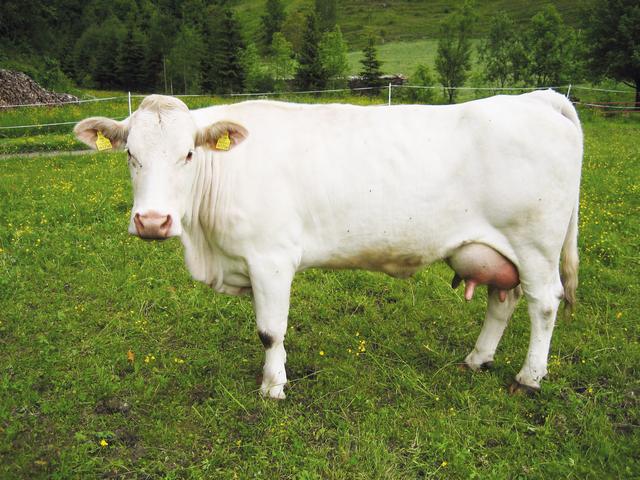
History of the breed: The Carinthian White cow is an ancient breed of cattle originating from the Carinthia region in Austria. The origins of this breed trace back to a distant past, influenced by various breeds, among which Hungarian Grey cattle, Bavarian, and Slavic breeds stand out. Historical records suggest that settlers from Slavic lands may have brought the ancestors of this breed to Carinthia as early as the 6th century. Later, the cattle were crossed with German breeds, including Red Spotted and Yellow cattle. This mixing of breeds contributed to the emergence of distinct lines, which were initially perceived as separate breeds. Historical mentions of the Carinthian White breed of cows appear as early as the early 17th century. For example, in 1604, a pair of oxen with a characteristic white mark on their backs was noted in Ebersstein. In 1703, Count Kristanig described a "spotted milking cow," which likely became the prototype of the modern Carinthian White. In the 18th century, significant attention was paid to cattle breeding in Carinthia, supported by government subsidies. Since 1803, agricultural societies began actively promoting the idea of improving local breeds. By the mid-19th century, the Carinthian White cow gained recognition as one of the best breeds in the Austro-Hungarian Empire. In 1890, livestock breeders decided to unite different lines under a common name, and the breed received its official designation. During this period, breeding work intensified, contributing to the improvement of breed qualities. At the end of the 19th century, cooperatives and markets for breeding cattle appeared in Carinthia, and the breed became the most widespread in the region. However, in the 20th century, the breed faced a crisis. In the 1980s, its population sharply declined, and it was threatened with extinction. To preserve the unique gene pool, a new club for breeding the Carinthian White cow was established in 1994, focusing on restoring the breed. Thanks to these efforts, the population of the breed began to gradually recover, and it once again attracted the attention of farmers seeking to preserve traditional cattle breeds. Exterior: The Carinthian White cow is a medium-sized animal with an elegant shape and a fine bone structure. The head is elongated, with well-defined features, and the body is sturdy, with moderately developed musculature. The height at the withers for cows is 128–135 cm, while for bulls it is 138–145 cm.
Masuk untuk info lebih lanjut
MasukApa yang harus diberikan makan
Diet: The main feed consists of grasses growing in pastures, dry hay, and quality silage. These components are fundamental and allow animals to maintain health and high productivity. During periods of pregnancy and lactation, the nutrition of cows should be enriched. During these periods, it is especially important to add proteins, vitamins, and minerals. These elements help maintain the cow's health, ensure the full development of the calf, and contribute to increased milk productivity. Young animals in the first weeks of life are fed with their mother's milk. Gradually, other types of feed are introduced into their diet. This can include soft hay and small portions of concentrated feeds, which help calves get used to plant-based food.
Parameter fisik
Berat jantan: 800–1000 kg
Berat betina: 500–700 kg
Tinggi jantan: 138–145 cm
Tinggi betina: 128–135 cm
Habitat
Austria
Jerman
Slovakia
Slovenia
Pertanyaan umum
Berapa berat Carinthian White Cow?
Hewan dewasa: jantan — 800–1000 kg, betina — 500–700 kg.
Berapa tinggi Carinthian White Cow?
Tinggi di layu: jantan — 138–145 cm, betina — 128–135 cm.
Dari mana asal Carinthian White Cow?
Negara asal — Austria.
Di mana Carinthian White Cow dibudidayakan?
Ras ini tersebar di: Austria, Jerman, Slovakia, Slovenia.
Apa yang harus diberikan makan kepada Carinthian White Cow?
Diet: The main feed consists of grasses growing in pastures, dry hay, and quality silage.
Tanya Jawab
Belum ada pertanyaan. Ajukan yang pertama!
Masuk untuk mengajukan pertanyaan