








Afrikaner — beli atau jual


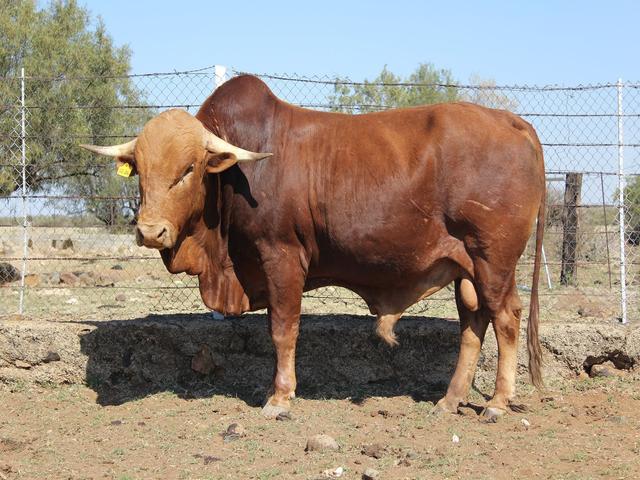
Breed history: Afrikaner (or Afrikander) is a breed of cattle that is an integral part of the history and culture of South Africa. This indigenous breed belongs to the Santa group, which includes ancient breeds of African cattle. Afrikaners are primarily raised for meat production and are considered the most popular local breed in South Africa. The history of Afrikaners dates back to ancient times. They were brought to South Africa by the Khoikhoi people as early as the first century AD. The first owners of these cattle were the Khoikhoi, who passed them on to Dutch colonists in 1652. The latter appreciated the endurance and strength of Afrikaners and began using them as draft animals. It was the Afrikaner oxen that pulled the wagons of the Boers during the Great Trek of 1835-1836, when they migrated deeper into the continent. By the end of the 19th and the beginning of the 20th century, Afrikaners were on the brink of extinction. An outbreak of cattle plague and the war in South Africa dealt a severe blow to the population. However, thanks to the efforts of farmers, the surviving herds allowed the breed to be revived. In 1912, the first Afrikaner breeding society was established in South Africa, which contributed to its further development. In the early 20th century, the breed again faced the threat of extinction due to the destruction during the Second Anglo-Boer War and an outbreak of plague. After the war, breeding improvement programs were developed, which allowed the breed not only to survive but also to spread beyond South Africa. In 1923, it was proposed to send Afrikaners to the USA, and in 1932, the US government imported a herd to improve local breeds along the Gulf Coast. In 1953, Afrikaners arrived in Australia, where they began to be studied for adaptation to the local climate. Today, the Afrikaner is a successful meat breed that is popular not only in South Africa but also in other countries around the world. Exterior: The Afrikaner is a large breed of cattle with long legs and well-developed musculature, indicating their meat production orientation. Adult cows weigh between 525–600 kg, while bulls weigh between 750–1000 kg. There are also true giants: bulls weighing over 1100 kg and cows over 800 kg. The height at the withers of Afrikaners is impressive. Adult individuals can reach 152 cm at the withers. The average height of bulls is 143 cm, while cows measure 115 cm (which is remarkable).
Masuk untuk info lebih lanjut
MasukApa yang harus diberikan makan
Diet: The Afrikaner cow is very resilient and can live even in harsh conditions where there is little food and water. Afrikaner bulls raised on regular grass with the addition of phosphorus and salt weigh an average of 250 kg at 27–30 months of age. This is a very good result, considering they do not receive much special feed. Of course, Afrikaners feel best in pastures. However, during dry periods, the grass burns out, and the cows may start to starve. They particularly lack calcium and phosphorus, which negatively affects their health and productivity. To address this issue, farmers use various methods. Throughout the year, cows are given mineral supplements with calcium and phosphorus. They can also be fed grain, but this is expensive, as the grain has to be imported from other countries. In some farms, cows are fed bran and brewer's grains—these are useful and nutritious by-products from factories. However, not all farmers have the means to obtain them. Another method is to prepare straw and plant residues after harvesting for winter, such as peanut foliage. Some farmers grow special forage crops, such as lablab or dark purple macroptilium. They grow well even in areas with little water and are excellent feed for cows. Sometimes cows are supplemented with chicken manure, but it must first be specially processed to avoid infecting the cows with diseases, and such supplementation should not be overused.
Parameter fisik
Berat jantan: 750–1000 kg
Berat betina: 525–600 kg
Tinggi jantan: 110–143 cm
Tinggi betina: 90–115 cm
Habitat
Afganistan
Afrika Selatan
Albania
Aljazair
Amerika Serikat
Andorra
Angola
Anguilla
Antigua dan Barbuda
Arab Saudi
Argentina
Armenia
Aruba
Australia
Austria
Azerbaijan
Bahama
Bahrain
Bangladesh
Barbados
Belanda
Belanda Karibia
Belarus
Belgia
Belize
Benin
Bermuda
Bhutan
Bolivia
Bosnia dan Herzegovina
Botswana
Brasil
Brunei
Bulgaria
Burkina Faso
Burundi
Ceko
Chad
Cile
Curaçao
Côte d’Ivoire
Denmark
Dominika
Ekuador
El Salvador
Estonia
eSwatini
Etiopia
Fiji
Filipina
Finlandia
Gabon
Gambia
Georgia
Ghana
Gibraltar
Greenland
Grenada
Guadeloupe
Guam
Guatemala
Guernsey
Guinea
Guinea Ekuatorial
Guinea-Bissau
Guyana
Guyana Prancis
Haiti
Honduras
Hong Kong DAK Tiongkok
Hungaria
India
Indonesia
Inggris Raya
Irak
Iran
Irlandia
Islandia
Israel
Italia
Jamaika
Jepang
Jerman
Jersey
Jibuti
Kaledonia Baru
Kamboja
Kamerun
Kanada
Kazakhstan
Kenya
Kepulauan Aland
Kepulauan Cayman
Kepulauan Cook
Kepulauan Faroe
Kepulauan Mariana Utara
Kepulauan Marshall
Kepulauan Solomon
Kepulauan Turks dan Caicos
Kepulauan Virgin Amerika Serikat
Kepulauan Virgin Britania Raya
Kepulauan Wallis dan Futuna
Kirgizstan
Kiribati
Kolombia
Komoro
Kongo - Brazzaville
Kongo - Kinshasa
Korea Selatan
Korea Utara
Kosovo
Kosta Rika
Kroasia
Kuba
Kuwait
Laos
Latvia
Lebanon
Lesotho
Liberia
Libya
Liechtenstein
Lituania
Luksemburg
Madagaskar
Makau DAK Tiongkok
Makedonia Utara
Maladewa
Malawi
Malaysia
Mali
Malta
Maroko
Martinik
Mauritania
Mauritius
Mayotte
Meksiko
Mesir
Mikronesia
Moldova
Monako
Mongolia
Montenegro
Mozambik
Myanmar (Burma)
Namibia
Nauru
Nepal
Niger
Nigeria
Nikaragua
Norwegia
Oman
Pakistan
Palau
Panama
Papua Nugini
Paraguay
Peru
Polandia
Polinesia Prancis
Portugal
Prancis
Puerto Riko
Pulau Man
Qatar
Republik Afrika Tengah
Republik Dominika
Rumania
Rusia
Rwanda
Réunion
Sahara Barat
Saint Kitts dan Nevis
Saint Lucia
Saint Martin
Saint Vincent dan Grenadine
Samoa
Samoa Amerika
San Marino
Sao Tome dan Principe
Selandia Baru
Senegal
Serbia
Seychelles
Sierra Leone
Singapura
Sint Maarten
Siprus
Slovakia
Slovenia
Somalia
Spanyol
Sri Lanka
Sudan
Sudan Selatan
Suriah
Suriname
Swedia
Swiss
Taiwan
Tajikistan
Tanjung Verde
Tanzania
Thailand
Timor Leste
Tiongkok
Togo
Tonga
Trinidad dan Tobago
Tunisia
Turki
Turkmenistan
Tuvalu
Uganda
Ukraina
Uni Emirat Arab
Uruguay
Uzbekistan
Vanuatu
Venezuela
Vietnam
Wilayah Palestina
Yaman
Yordania
Yunani
Zambia
Zimbabwe
Pertanyaan umum
Berapa berat Afrikaner?
Hewan dewasa: jantan — 750–1000 kg, betina — 525–600 kg.
Berapa tinggi Afrikaner?
Tinggi di layu: jantan — 110–143 cm, betina — 90–115 cm.
Dari mana asal Afrikaner?
Negara asal — Afrika Selatan.
Di mana Afrikaner dibudidayakan?
Ras ini tersebar di: Afganistan, Afrika Selatan, Albania, Aljazair, Amerika Serikat, Andorra, Angola, Anguilla.
Apa yang harus diberikan makan kepada Afrikaner?
Diet: The Afrikaner cow is very resilient and can live even in harsh conditions where there is little food and water.
Tanya Jawab
Belum ada pertanyaan. Ajukan yang pertama!
Masuk untuk mengajukan pertanyaan